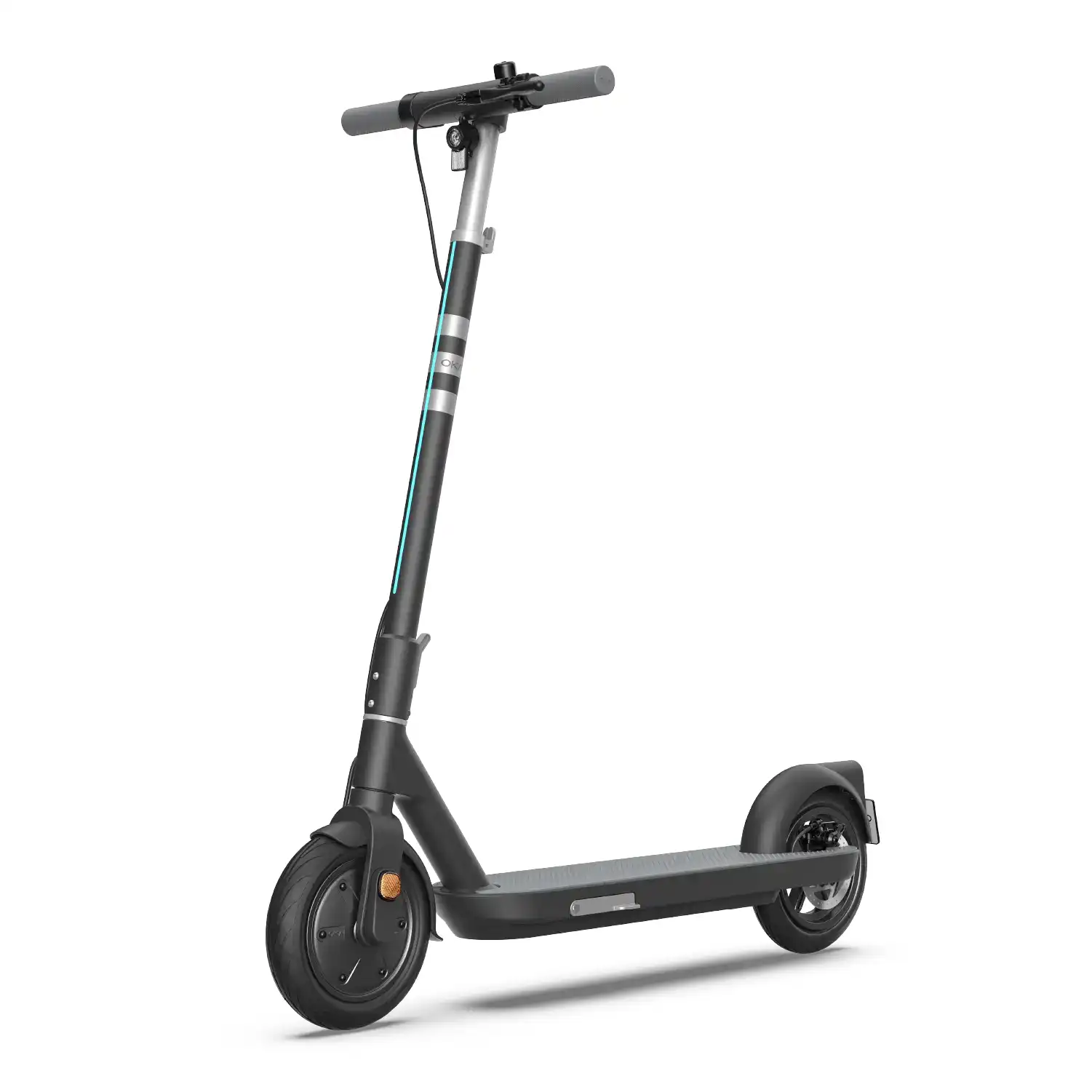

Quick answer
There is no single best OKAI scooter for every Costa Rica rider. Short, flatter city trips favor portability and simple ownership. Mixed roads and longer commuting favor suspension, tire comfort and battery margin. Repeated steep climbs require a balanced system—motor output, traction, braking and battery—not a headline top-speed number.
Key takeaways
- Quick answer: match the OKAI to your hardest route
- Route and budget decision matrix
- Real range, hills and rain
- Which model should you choose?
Quick answer: match the OKAI to your hardest route
There is no single best OKAI scooter for every Costa Rica rider. Short, flatter city trips favor portability and simple ownership. Mixed roads and longer commuting favor suspension, tire comfort and battery margin. Repeated steep climbs require a balanced system—motor output, traction, braking and battery—not a headline top-speed number.
Treat manufacturer range as a comparison benchmark. Rider weight, elevation, speed, tire pressure, wind and battery condition all change real-world range.
Related reading
Route and budget decision matrix
Choose against the hardest regular route, while avoiding capacity you will never use.
Comparación
Comparison table
| Rider profile | Buying priority | OKAI family to compare |
|---|---|---|
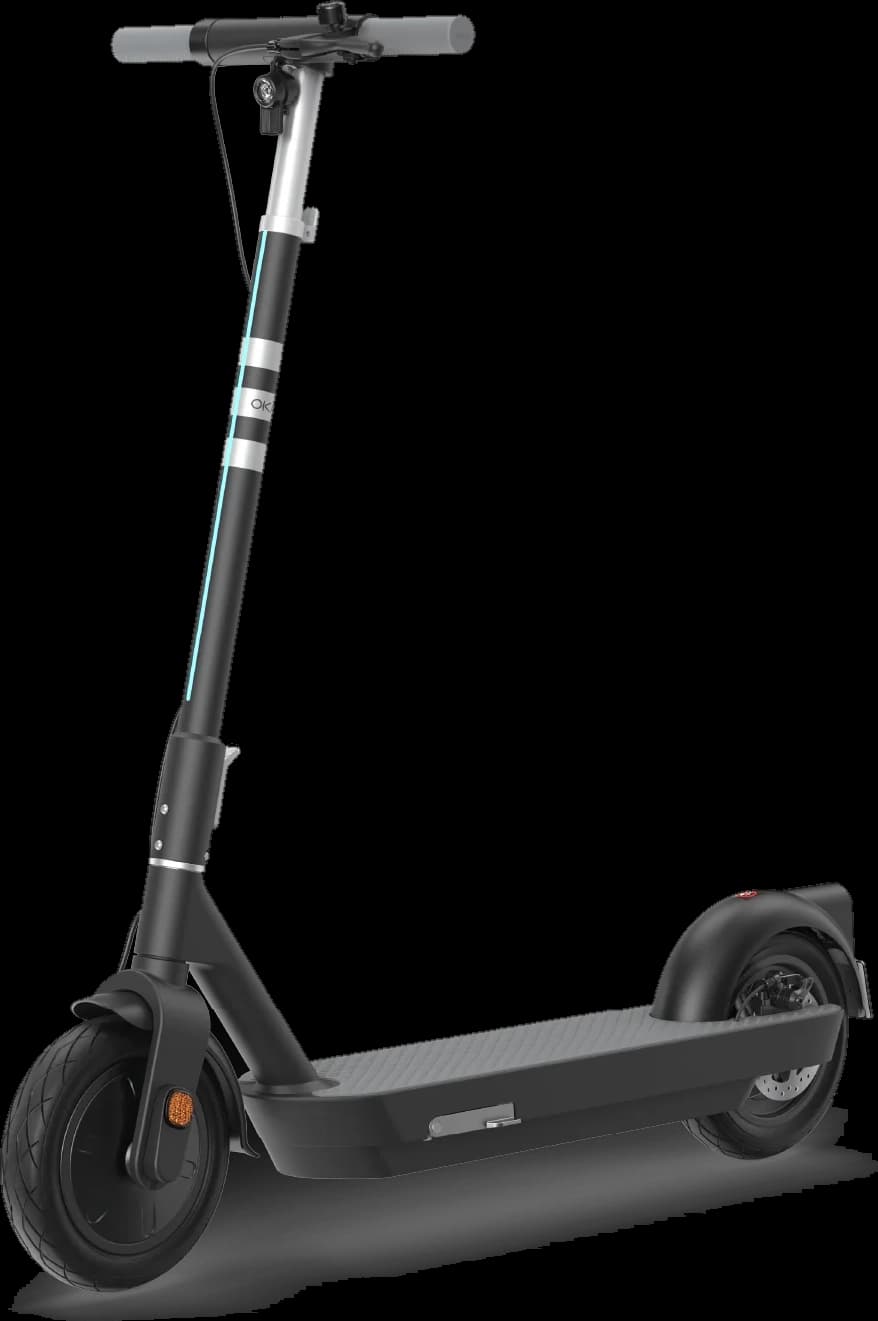
| Short city commute | Folding, lights, weight and cost | Neon Lite / Neon Pro |
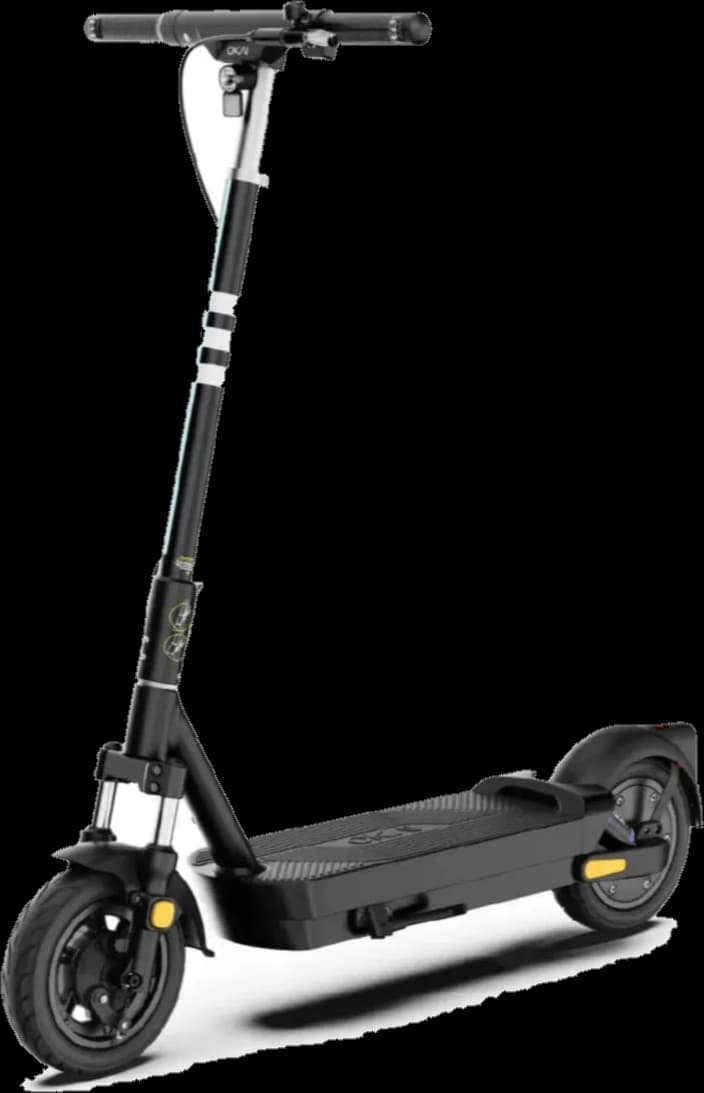
| Mixed daily route | Comfort, suspension and range margin | Neon Ultra / ESM4 |
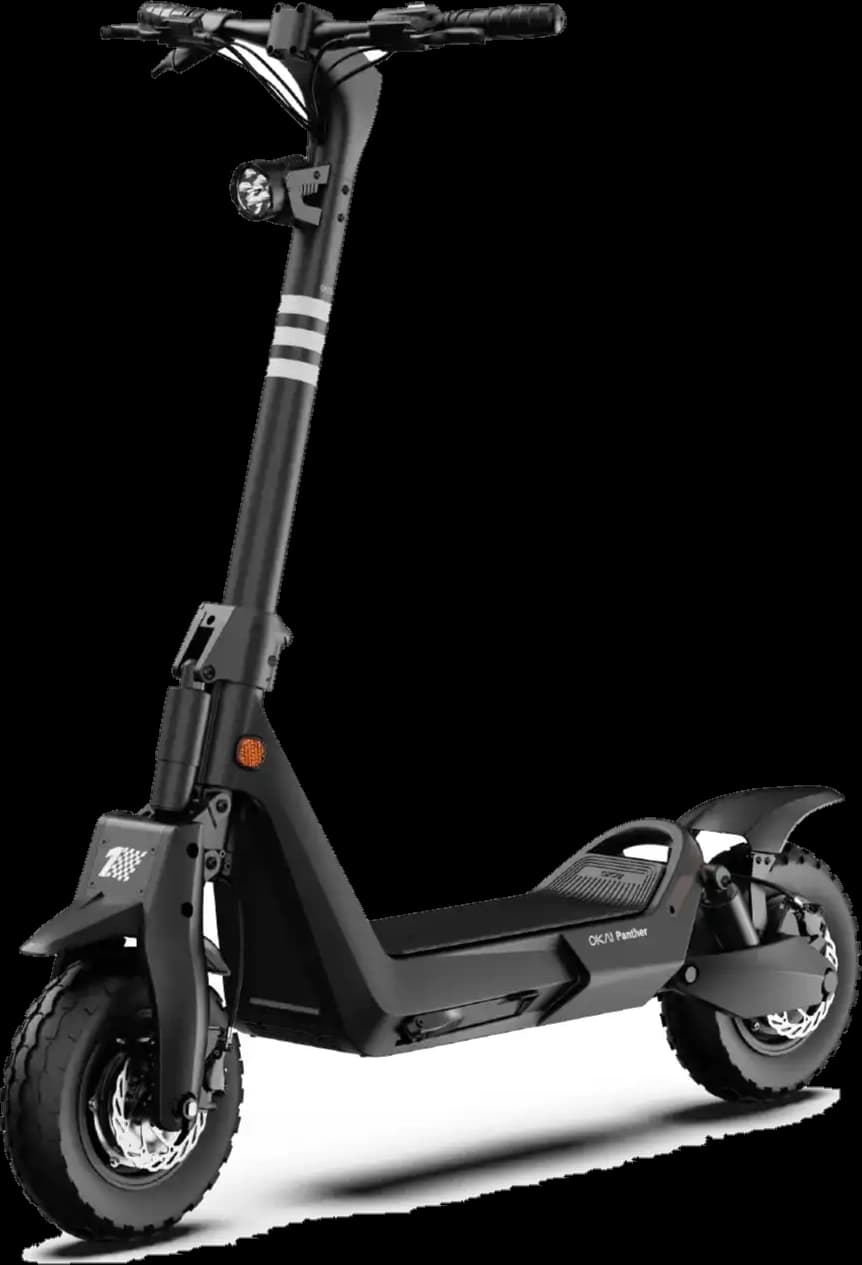
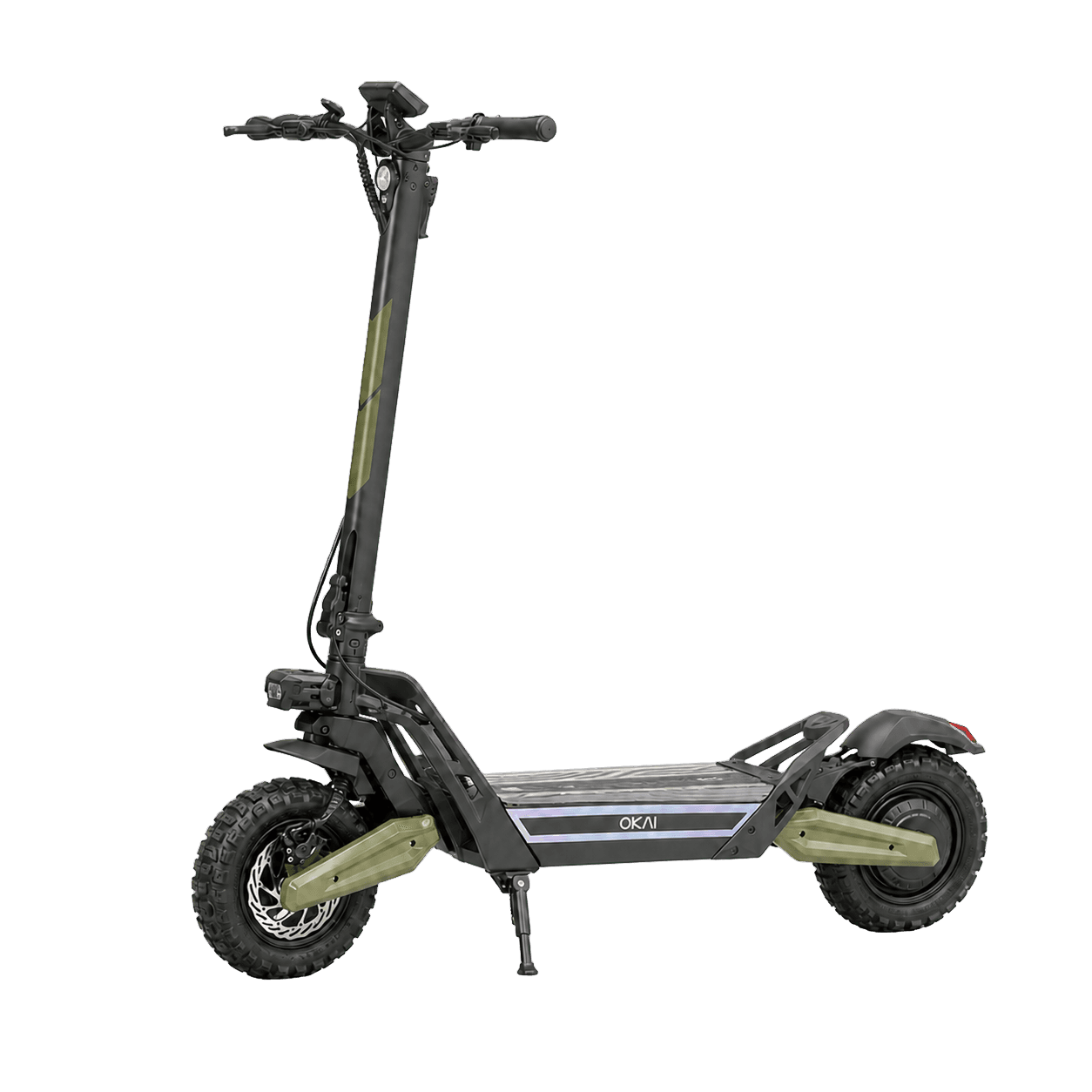
| Steep or demanding terrain | Traction, braking and battery | Panther ES800 |
| Seated or light-cargo need | Posture, stability and utility | Seated model or e-bike |
Real range, hills and rain
Costa Rica elevation and repeated acceleration can reduce range materially. Keep battery reserve instead of planning to arrive at zero.
Water resistance is not permission for immersion or pressure washing. Avoid deep water and charge only when the port and connector are dry.
Which model should you choose?
Choose Neon Lite or Neon Pro when portability and city use matter most. Move to a comfort-focused platform when distance, rough pavement and frequent use justify it. Consider Panther ES800 only when the route needs high performance and you accept the added size, cost and service needs.
Before ordering, confirm current availability, preorder status, applicable warranty, charger compatibility, tire supply and the Costa Rica service workflow.
Related reading
Start with the route you will actually ride
A useful comparison begins outside the specification sheet. Record round-trip distance, the hardest grade, pavement type, rider weight with a normal bag, storage location and the number of trips per day. One short occasional ramp is not the same requirement as two long climbs every workday. If the grade is unknown, a map screenshot and street photos provide better context than calling it “very steep.”
Costa Rica adds three practical variables: afternoon rain, broken pavement or metal covers, and covered storage. Rain does not automatically make a commuter scooter unsuitable, but it increases the importance of grip, stopping distance and drying habits. Storage can reverse a decision too: a capable performance scooter may be inconvenient if it must be carried up stairs every day.
- Measure the complete round trip.
- Use the hardest regular hill as the capacity filter.
- Include rider, bag and cargo weight.
- Confirm dry storage and charging access.
- Separate daily, occasional and commercial use.
Read power, torque and speed without mixing them up
Nominal watts describe sustained capability under defined conditions, while peak output is usually temporary. Neither number alone predicts hill performance. Controller programming, battery state, temperature, wheel diameter, traction and total load all shape the result. Two scooters with similar headline numbers can respond differently when starting on a grade or sustaining a longer climb.
Top speed should not dominate the decision. Predictable power delivery, braking and stability usually create more value on an urban route than a speed that cannot be used safely. Ask how the model fits your route and review manufacturer limits. Motion can advise by use profile, but a laboratory figure should never be presented as a guarantee for every rider and street.
Usable range: buy margin, not an exact promise
Published range is a benchmark produced under a specific combination of speed, load, temperature and surface. Daily acceleration, hills and braking change consumption. Low tire pressure also increases rolling resistance. The practical goal is not reaching the advertised maximum; it is completing the regular route without operating near zero or relying on an improvised charge.
Keep reserve for detours, battery aging and less favorable days. If a round trip is twenty kilometers, do not automatically select a scooter whose stated maximum barely exceeds it. Ask how the figure was measured, read the manual and plan dry, ventilated charging. Conservative planning matters even more on routes with repeated elevation.
Comfort, tires and suspension after the first week
Tire construction, deck geometry, handlebar position and suspension determine how much fatigue builds over time. A short test on smooth flooring can hide vibration from joints, patched asphalt and pavers. Pneumatic tires can add compliance but require pressure checks and inspection. More robust platforms may improve control while adding weight and storage volume.
Consider every repeated task: turning, parking, folding, carrying and storing. Folding may dominate for a rider combining a scooter with a car, elevator or office. Stability matters more on persistent gravel or rough pavement. The right model minimizes compromise in the tasks that occur every week.
Brakes and descents: climbing is only half the route
Many comparisons ask whether a scooter can climb but ignore the return downhill. Review brake type, modulation, parts availability and inspection procedure. A powerful brake that is poorly adjusted is not an advantage. Riders also need a stable position, earlier decisions and more stopping distance on wet surfaces.
For frequent hills, ask about pads, rotors, cables or hydraulic service as applicable. Confirm who performs adjustments and how maintenance is documented. Test any repair at low speed in a controlled space. Vibration, metal noise or reduced response requires inspection before another demanding descent.
Budget tiers: essential, balanced and high performance
An essential budget covers a route-appropriate vehicle, helmet, lock and basic maintenance. A balanced tier may add comfort, battery reserve and better rough-road behavior. High performance is justified when grades, terrain or load require it; it is not automatically the smartest answer for a short flat commute.
Compare final price with charger, applicable warranty, tire and brake supply, delivery and service. A low sticker price loses value when every consumable must be imported. Paying for capability that is never used also ties up budget. The better choice balances capacity, serviceability and total cost over the expected ownership period.
A seven-step model decision process
Use the same inputs for every model so the decision is not driven by one attractive number.
- Document route, distance, grades, surface and weather.
- Define total load and carrying or folding needs.
- Remove options without reasonable range reserve.
- Compare braking, tires, control and comfort.
- Confirm live inventory or preorder status and delivery timing.
- Request warranty, consumables and service workflow in writing.
- Choose the model that solves the route with the least total compromise.
Model profiles: who benefits and who should choose differently
A lightweight commuter profile suits a rider with shorter paved trips, frequent folding and limited storage. Its advantage is not that it beats every model on performance; it removes friction from daily handling. A comfort commuter profile fits longer routes, patched pavement and riders who value stability over the lowest carrying weight. A high-performance profile belongs to demanding elevation or mixed terrain where added structure and capability are actually used.
Each profile also has a reason to choose differently. A rider facing long sustained climbs may be better served by an e-bike with useful gearing and pedal assistance. Someone transporting cargo or needing a seated posture should compare utility and seated options. A buyer who cannot provide dry storage or a safe charging location should solve that operational problem before selecting any scooter. Good advice sometimes redirects the purchase instead of forcing a model recommendation.
Questions to send Motion for a route-based recommendation
A useful request includes the start and destination area, round-trip distance, a map of the steepest section, rider weight range, surface type, storage constraints and expected weekly frequency. Mention whether the scooter will be carried, placed in a vehicle or shared by riders with different heights and weights. State your budget as a range that includes safety equipment rather than only the vehicle.
Ask the advisor to separate verified specifications, current local availability and editorial fit. Request alternatives when the first model is unavailable or excessive for the route. Confirm what remains uncertain and whether a demonstration, additional photo or service check would resolve it. This turns a sales conversation into a documented decision process that can be revisited when inventory or needs change.
Continue to the next decision
These guides separate model choice, ownership cost and maintenance so you can compare without duplicating criteria.