
Quick answer
A part that fits is not automatically compatible. Chargers and batteries require validated electrical specifications, connector, polarity and approved model. Tires, tubes and brakes require correct dimensions, mounting and vehicle version.
Key takeaways
- Quick answer: exact model beats visual similarity
- Chargers and batteries: “universal” is not a safety standard
- Tires and tubes: size, version and use
- Brakes: safety parts need diagnosis
Quick answer: exact model beats visual similarity
A part that fits is not automatically compatible. Chargers and batteries require validated electrical specifications, connector, polarity and approved model. Tires, tubes and brakes require correct dimensions, mounting and vehicle version.
Send the exact model, label and component photos before ordering. Motion must confirm inventory and compatibility; this guide does not replace technical diagnosis.
Chargers and batteries: “universal” is not a safety standard
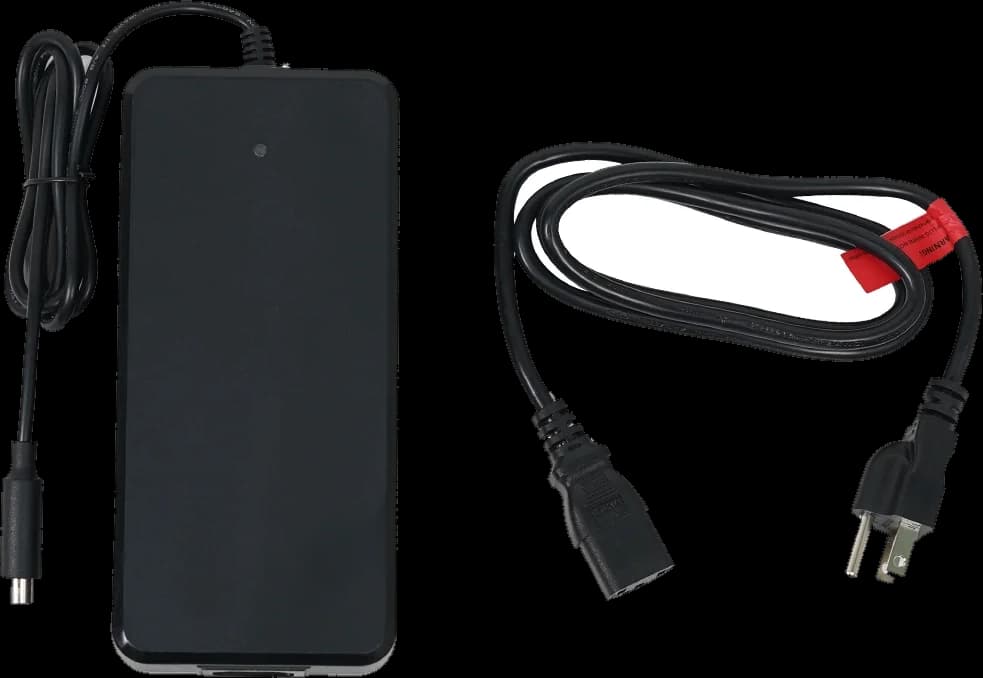
OKAI lists a model-specific Panther ES800 charger. Do not connect a visually similar charger without validating output, current, polarity and manufacturer compatibility. CPSC warns about incompatible universal micromobility chargers.
Comparación
Comparison table
| Data point | Where to find it | Why it matters |
|---|---|---|
| Exact model | Label or invoice | Prevents visual guessing |
| Charger output | Charger label | Must match the battery system |
| Connector and polarity | Manual, label and part | Mismatch can damage equipment |
| Port condition | Visual inspection | Never charge wet or damaged |
Related reading
Tires and tubes: size, version and use
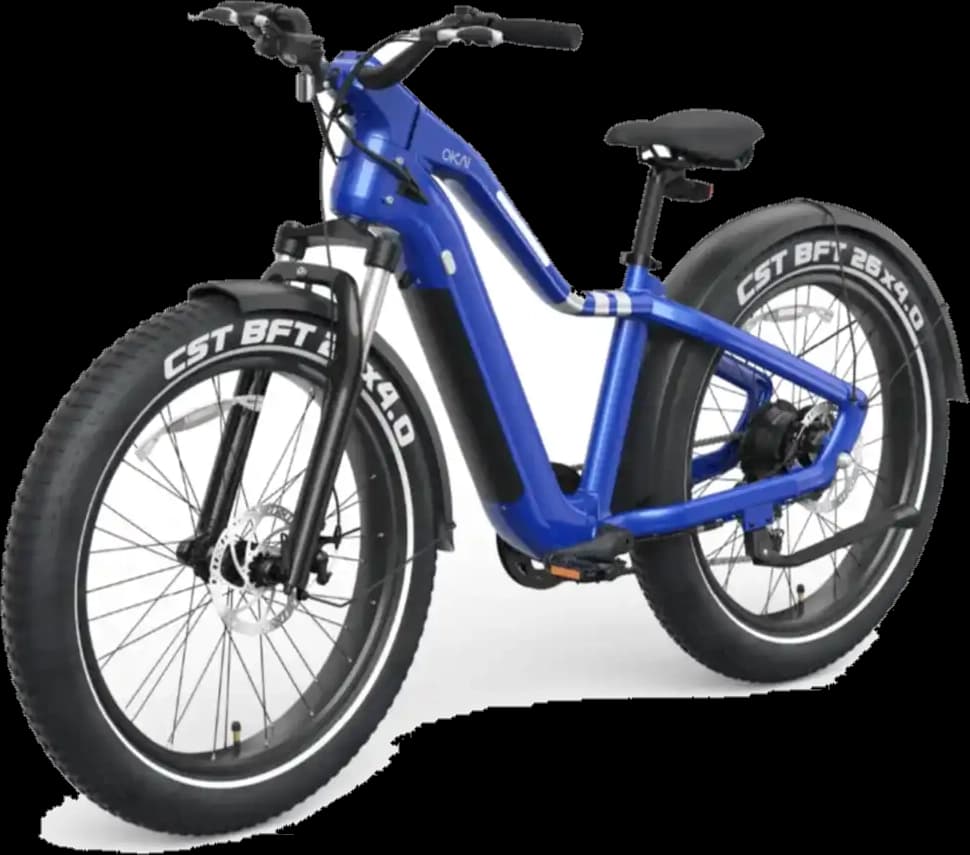
OKAI publishes the Ranger EB50 with 26 × 4 inch fat tires, but nominal size alone does not approve every replacement. Confirm rim fit, valve, tread, tube setup and clearance. Follow the installed tire or manufacturer pressure guidance rather than a generic number.
Brakes: safety parts need diagnosis
Pads, rotors, cables, sensors and hydraulic systems should not be selected from a photo alone. Stop demanding use and request inspection if braking feels soft, rubs, vibrates or loses power. Test replacements at low speed before returning to traffic or descents.
Related reading
Five details needed to identify a part
Send the full model, serial number when available, vehicle label photo, installed-part photo and symptom description. For chargers, include a readable input/output label; for tires, include every sidewall marking.
Why a physically similar part can still be wrong
Compatibility combines dimensions, electrical specifications, firmware, connectors, mounting and vehicle version. Two chargers with similar plugs may deliver different output. Brake pads with a similar outline may use another thickness or compound. A tire with the same nominal size can have a different profile and clearance requirement.
Do not begin with a visually similar photograph. Identify the complete model, variant, relevant production information and serial number. Keep the original part until diagnosis is complete. Do not cut connectors or modify brackets to force a fit; that creates technical risk and may complicate warranty.
Read a charger label without guessing
A charger label normally separates input from output. Input describes the supply it receives; output describes what it sends to the vehicle. Compatibility requires validated voltage, current, polarity, connector and approval for the specific battery. Matching voltage alone is not enough.
Photograph the entire label and the connector from several angles. Disconnect and request review if the cable is cut, housing swollen, smell unusual or temperature abnormal. Do not open it unless qualified. Charge on an appropriate surface with ventilation, supervision and a completely dry port.
Battery diagnosis before replacement
Reduced range does not prove that a battery needs replacement. Tire pressure, temperature, elevation, load, dragging brakes and power settings also change range. Compare like conditions and record distance, starting and ending level, route and any error.
Stop using and charging if there is physical damage, odor, abnormal heat, smoke or water intrusion. Do not follow improvised instructions for opening a lithium pack. Replacement requires a battery approved for the exact model and responsible handling of the removed unit.
Tires, tubes and valves: every detail that should match
Photograph all sidewall markings: diameter, width, pressure range and codes. Confirm tube, tubeless or other configuration, plus valve type and length. Motor wheels also require attention to wiring, rotation direction and removal procedure.
Select tread for the actual surface. Aggressive tread may help on loose terrain while adding noise and resistance on pavement. An efficient urban tire may not suit regular gravel. After installation, check even seating, pressure and free rotation, then test slowly before a long ride.
Brake systems: identify without compromising safety
First identify mechanical, hydraulic, drum, disc or combined systems. Record caliper details, rotor diameter and thickness, pad shape and sensor position. Keep lubricants and unsuitable cleaners away from friction surfaces.
New pads cannot correct a bent rotor, damaged cable, air in a hydraulic line or a misaligned caliper. Diagnosis must find the cause. After service, confirm free wheel rotation, progressive braking, no leaks and secure hardware. Descending routes need more frequent checks.
What an owner can inspect and what needs a technician
Owners can document labels, maintain specified tire pressure, observe wear, clean according to the manual and check lights and basic brake response. They should not open a battery, improvise electrical connections or adjust systems they do not understand. Knowing when to stop is responsible maintenance.
A technician should handle electrical faults, burned connectors, weak braking, steering play, structural damage, hydraulic leaks and persistent symptoms. Good photos and a precise description shorten identification. State when the issue began, what happened beforehand and whether load, rain or temperature changes it.
Information request that gets a useful answer
A complete message avoids repeated questions and reduces wrong-part risk.
- Brand, full model and version.
- Serial number when relevant.
- Readable vehicle label photo.
- Overall and close-up component photos.
- All printed tire, tube, rotor or part dimensions.
- Complete charger input and output label.
- Symptom, timing and recent changes.
- Costa Rica location and shipping or service need.
After the part arrives: install, test and record
Confirm the part number and compare it with the removed component before installation. Follow the manual and use suitable tools. Professional installation is appropriate when work affects brakes, steering, a motor wheel or electrical systems. Keep packaging, invoice and old part until operation is verified.
Begin with a static check, then a low-speed test in a controlled area. Watch noise, temperature, rotation, braking and fasteners. Inspect again after a short ride. Record date, mileage and installed part; that history simplifies future diagnosis.
Common mistakes when ordering parts online
The most common errors are selecting by photo, copying one dimension, ignoring the version, treating “universal” as a safety approval and forgetting return cost. Wear components and complete assemblies are also confused. A listing may use a generic image or combine several variants under one title.
Before payment, request the part number, dimensions, specifications, return policy and written compatibility confirmation. Identify who pays transport when it does not match. A cheaper part can cost more after modification, international shipping or a second purchase. Do not experiment with charging or safety components.
Create a maintenance history for each vehicle
Keep the model, serial, purchase date, manuals, installed parts, mileage and observations. Photograph labels and connectors before they deteriorate. Fleets should assign an identifier to every unit instead of mixing records; identical vehicles can accumulate very different use and damage.
History reveals recurring issues, supports consumables planning and improves support requests. It also avoids remeasuring or disassembling the vehicle whenever a part is needed. Record who performed the work and which test followed. Documentation does not replace inspection, but it makes inspection faster and more precise.
Connector compatibility is more than shape
A connector includes pin count, pin assignment, polarity, keying, current capacity, sealing and mechanical retention. Two plugs can appear identical from the front while wiring differs. Never probe, bridge or rewire a lithium charging system without approved documentation and qualified service.
Send close photos without inserting objects into the port. Include the charger label, vehicle label and original part number. If a connector is loose, corroded, burned or wet, stop charging until reviewed. Replacing only the charger may not solve a damaged port.
Plan parts for a fleet without overstocking
Fleet operators should rank components by failure impact, lead time, verified interchangeability and safe storage. Tires, tubes, approved chargers and model-specific wear items may justify minimum stock when downtime affects guests. Expensive electronic assemblies usually need diagnosis before purchase.
Track consumption per unit and route, set reorder points from actual use and rotate inventory so rubber and packaged components do not sit forgotten. Standardizing models can simplify training and stock, but only when one platform fits the routes. Parts planning should follow the operating design, not drive riders into an unsuitable vehicle.
Final compatibility rule
Do not install a charger, battery, tire or brake component until the exact vehicle and part have been matched through reliable documentation or qualified confirmation. A photo can support identification, but it is not approval by itself. When evidence conflicts, stop and verify rather than choosing the most convenient answer.
Keep the confirmation with the invoice and maintenance record. That creates a repeatable reference for the next order and helps Motion or another technician understand what is installed. Compatibility is a documented relationship between vehicle and component—not a marketing word printed on a marketplace listing.
Continue to the next decision
These guides separate model choice, ownership cost and maintenance so you can compare without duplicating criteria.
Related reading